
Keynote Speakers
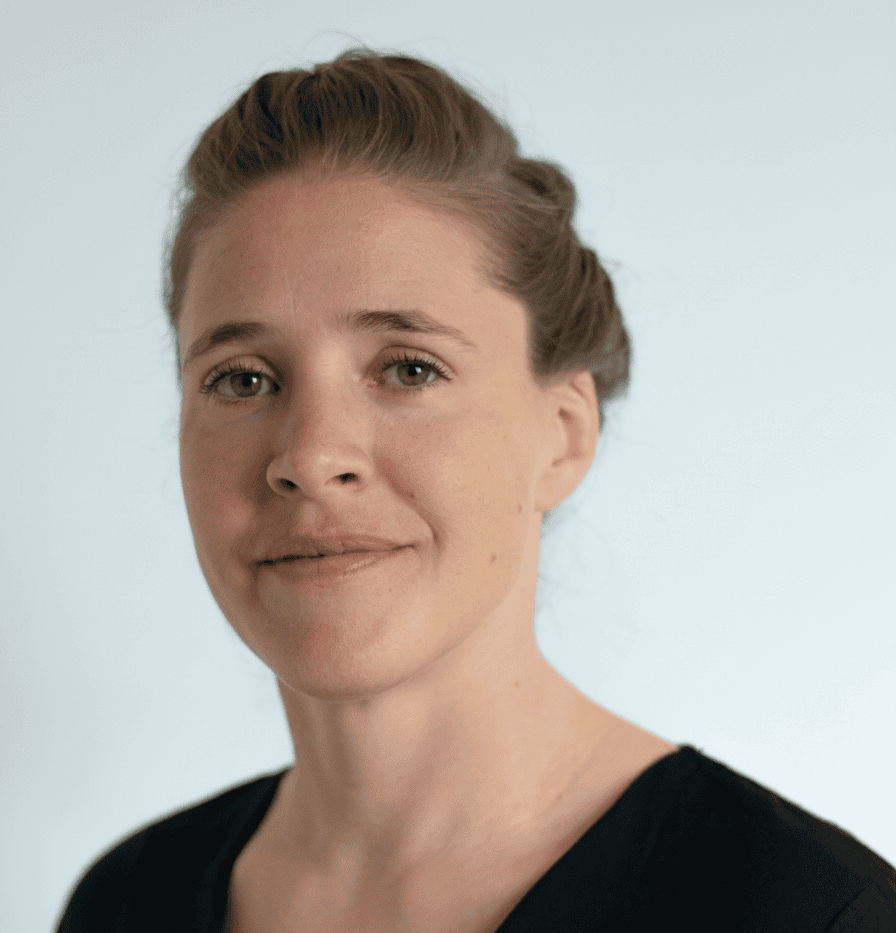
Anne K. Burghartz has been a structural engineer and project manager at the Berlin office of schlaich bergermann partner since 2016. She studied civil engineering at TU Berlin, focusing on structural engineering. At sbp, she has worked on bridges, buildings, pedestrian bridges, art installations, and lightweight and membrane structures. From 2023 to 2025, she helped develop the concap floor system, which received the Innovation Award from the German Sustainable Building Council in 2026. Her work also explores the intersection of engineering and art, including her role as structural engineer for Christo and Jeanne-Claude’s wrapping of the Arc de Triomphe, Paris in 2021.
Photo: Andrea Kubinsky
Keynote: The Art of Engineering Art +
This is the story of how we helped Christo & Jeanne-Claude to wrap the Arc de Triomphe in Paris in summer 2021. Not every successful structure is the result of optimization. In arts projects the outcome is often set by the artists from the beginning on and the task of the structural design team is to make a vision come true whilst fully embracing constraints rather than minimizing them.

Mennatallah El-Assady is an Assistant Professor in the Department of Computer Science at ETH Zurich, where she leads the Interactive Visualization and Intelligence Augmentation Lab (IVIA). Her research lies at the intersection of data analysis, visualization, computational linguistics, and explainable artificial intelligence. She focuses on combining data mining and machine learning techniques with visual analytics, particularly for text data. Before joining the faculty at ETH Zurich, she was a research fellow at the ETH AI Center and held research positions at the University of Konstanz and Ontario Tech University.
Keynote: Humans, Machines, and the Space Between: Engineering Effective Human-AI Partnerships +
Intelligence augmentation through mixed-initiative systems promises to combine AI’s computational efficiency with human contextual expertise. In this talk, I will explore a framework for bridging human and artificial intelligence through three core pillars: interpretability, feedback, and augmentation. Central to this vision are co-adaptive visual interfaces that facilitate seamless collaboration. First, it will be examined how interpretable design allows users to diagnose and understand complex models, building the transparency necessary for trust. Building on this, methods for integrating diverse human feedback directly into the learning loop, enabling models to refine their behavior in real-time will be discussed. Finally, it will be demonstrated how these combined elements lead to true intelligence augmentation, presenting workflow designs for computational linguistics that empower humans to solve problems more effectively than either party could alone. The talk will conclude with insights into current challenges and the promising research directions that lie ahead in engineering these symbiotic partnerships.
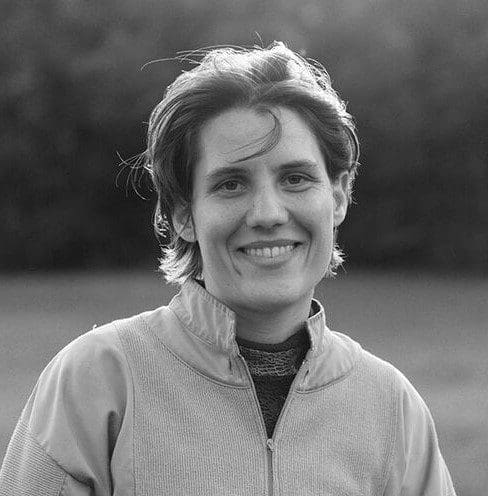
Mascha Fehse lives in Berlin and works between Arts, Architecture and Design. Her work deals with questions that concern public space and the commons, focusing on micro-scale collisions, applied experimental approaches and a design discourse that triggers curiosity and leaves room for a variety of perspectives. Her works orbit around social constellations, infrastructural relations, structural connections, environmental dependencies, imaginative associations, and constructive tensions, having resulted in a range of collaboratively produced and socially committed spaces.
Photo: Asia de Lorenzi
Keynote: Designing Endurance: Thinking Space with Materials, Energies, Users, Atmospheres and Other Agencies +
Design processes are seen as continuous, empirical attempts to create enduring transformative conditions. Here, endurance is understood not as a technical or material quality, but as the capacity and willingness of humans to invest themselves in ideas whose outcomes remain uncertain—to stay with open-ended processes over time. This means working with matter, energy, users, atmospheres, and other agencies, allowing them to reshape both the question and the outcome. Do we care to decide, and decide to care? More bluntly: can we still afford not to care—to treat care as a luxury or top-on rather than a condition of design?
The keynote will address prototypical spatial setups as learning environments for experimenting with and cultivating transformative cultural techniques. Here, speculation becomes a practical method for enabling encounters and debate. Rather than pursuing efficient, final solutions, design can prepare conditions for exchange, collective agency, reuse, and succession—treating architecture and design as a way of shaping spaces that enable what comes next.
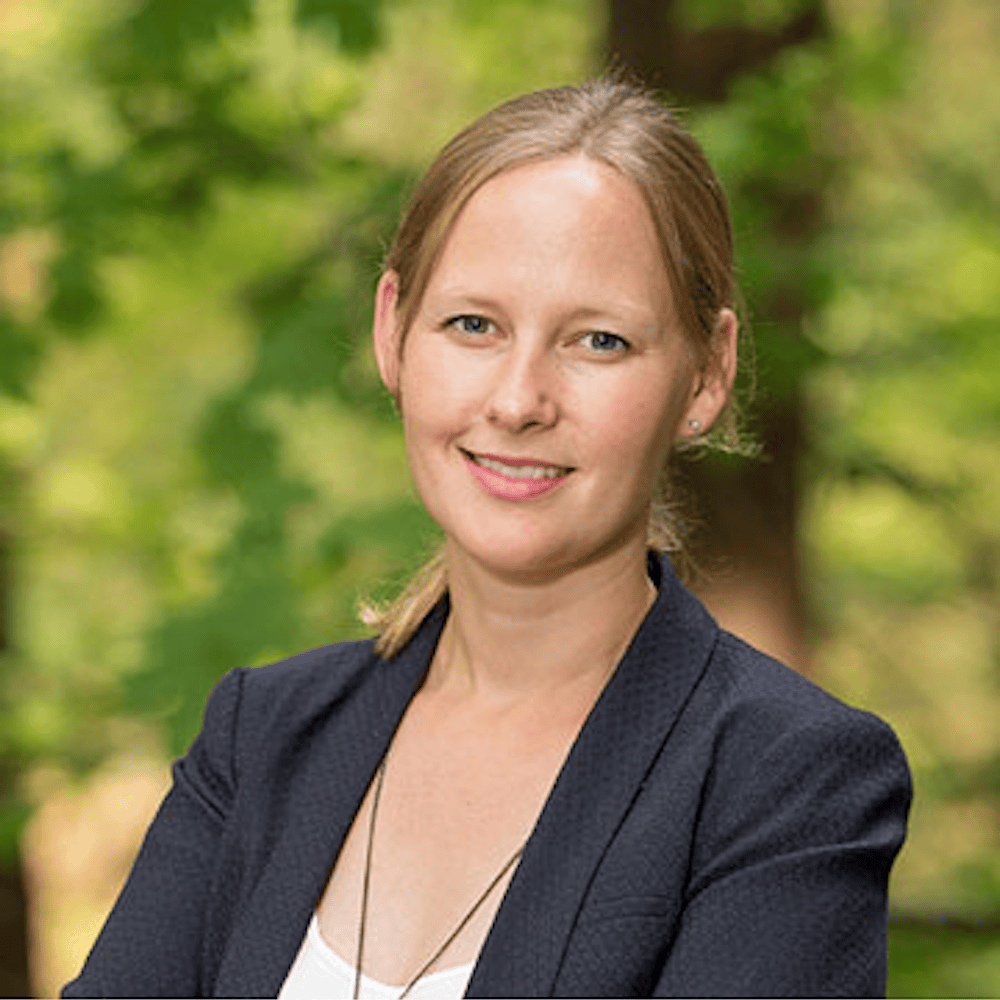
Kirstin H. Petersen is Associate Professor in Electrical and Computer Engineering at Cornell University and leads the Collective Embodied Intelligence Lab. Her research explores how robot collectives can coordinate using embodied and swarm intelligence, inspired by swarms in nature. Her research covers micro- mesoscale robots, soft robots, and active matter, with applications in collective construction, digital agriculture, biomedical procedures, and environmental monitoring and remediation. Before joining Cornell, she completed her PhD at Harvard University and the Wyss Institute for Biologically Inspired Engineering and was a postdoctoral researcher at the Max Planck Institute for Intelligent Systems.
Keynote: Emergent Construction in Insect and Robotic Swarms +
The art of designing with the uncontrollable lies in deciding what should be prescribed and what can be left to emerge through local interactions. Nature’s most successful collective builders achieve reliable outcomes without centralized control or global knowledge by using the physical structures they create. These structures shape local information, so that simple individuals can take actions that lead to collective progress. Drawing on inspiration from termites and honeybees, I will discuss how co-designing morphologies, environments, local behaviors, and planners can translate this concept to autonomous construction, where robots collaboratively assemble brick-like structures and shape granular terrain. The result is remarkably simple agents capable of sophisticated collective construction.
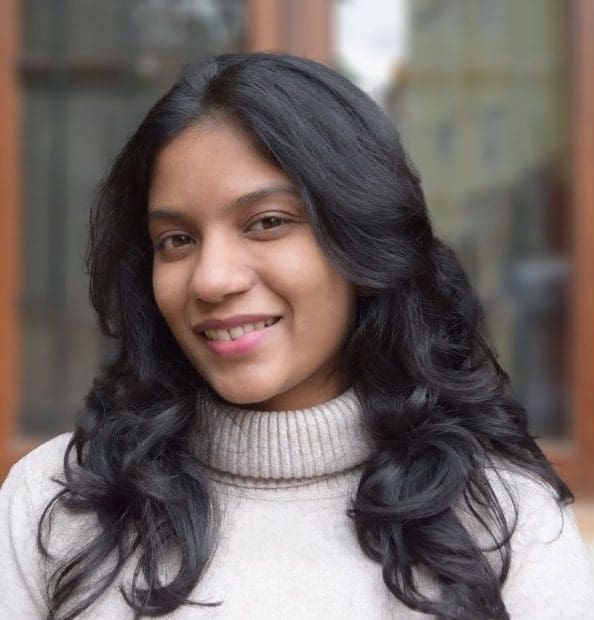
Deepika Raghu is a postdoctoral researcher in the Circular Engineering for Architecture Lab at ETH Zurich. Her research focuses on AI-driven tools for advancing a circular built environment, including global resource cadastres and the integration of artificial intelligence, machine learning, GIS, and remote sensing for sustainable construction practices. She also contributes to the Circular Future Cities Lab at the Singapore-ETH Centre and is affiliated with the Design++ Lab at ETH Zurich. Her work explores how existing buildings can be digitally analysed as material resources, supporting reuse, circular urban design, and new forms of data-informed decision-making in architecture and construction.
Keynote: AI-Driven Building Stock Intelligence for Circular Construction +
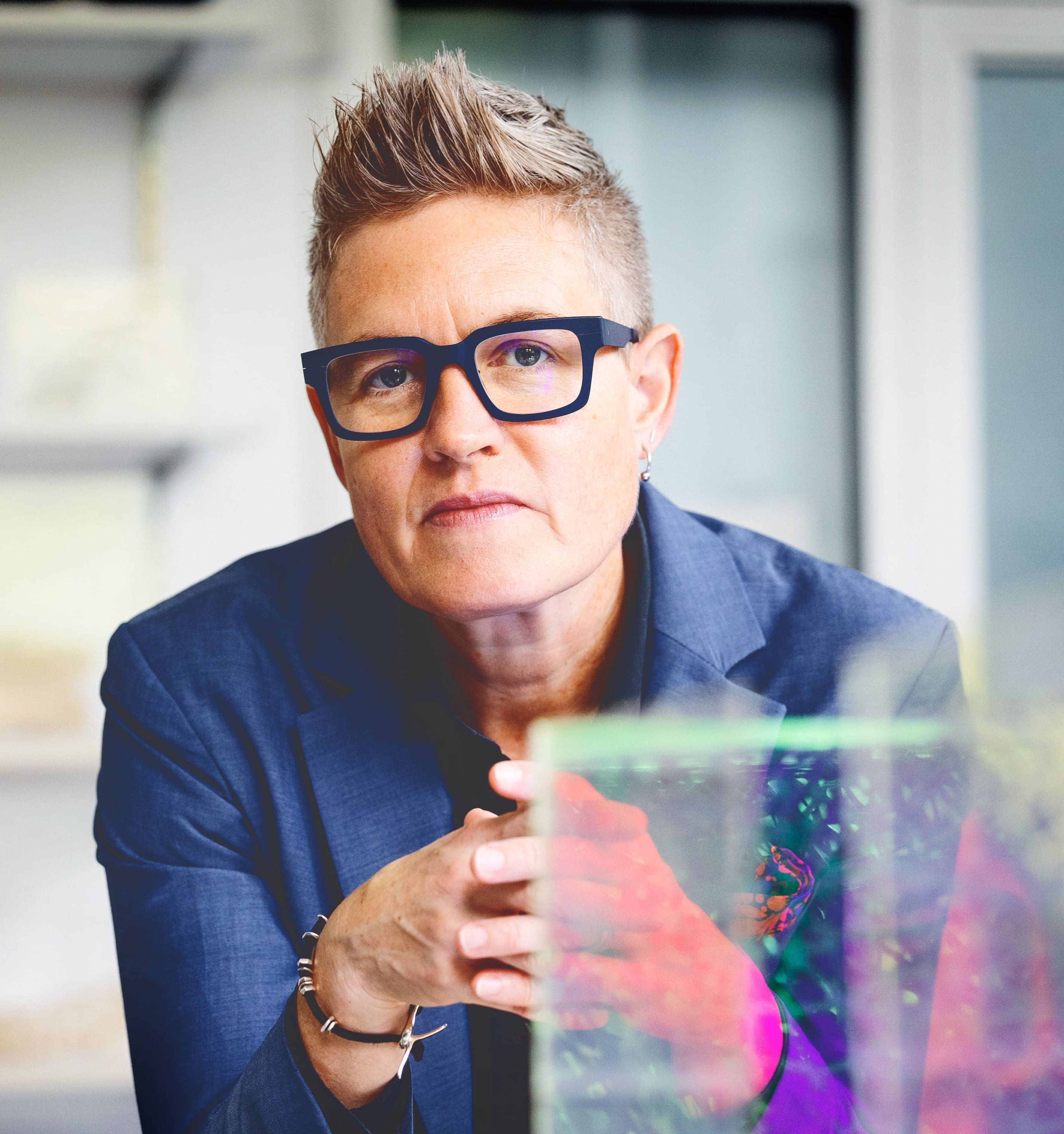
Jenny E. Sabin is the Arthur L. and Isabel B. Wiesenberger Professor in Architecture and inaugural Chair of the Department of Design Tech at Cornell University. She is principal of Jenny Sabin Studio and Director of the JSLab at Cornell AAP. Her work explores intersections between architecture, biology, mathematics and material science, translating these fields into responsive structures and ecological spatial interventions. Sabin’s work has been exhibited internationally and has received numerous awards, including the Architectural League Prize, the Women in Architecture Innovator Award and MoMA PS1’s Young Architects Program.
Photo: Ryan Young
Keynote: Biosynthetic Design: Choosing What to Leave Undecided +
Addressing urgent challenges in built and natural environments, architects must adopt transdisciplinary design-research models that respond to social, environmental, and technological imperatives shaped by advances in computation, material intelligence, and digital fabrication. As our tools become more capable, the following question becomes ever more important: what should the designer decide, and what should be left to the material, the machine, the collaborator, or the environment itself?
This keynote presents collaborative research spanning biology, materials science, engineering, fashion, and architecture, drawing on principles from 3D spatial biology and morphogenesis to establish feedback loops between environmental forces and biological form. The resulting biosynthetic approach integrates analog and computational processes to produce surface architectures and structural systems that respond to both internal programming and external conditions, treating uncertainty not as a failure of control but as a design medium.